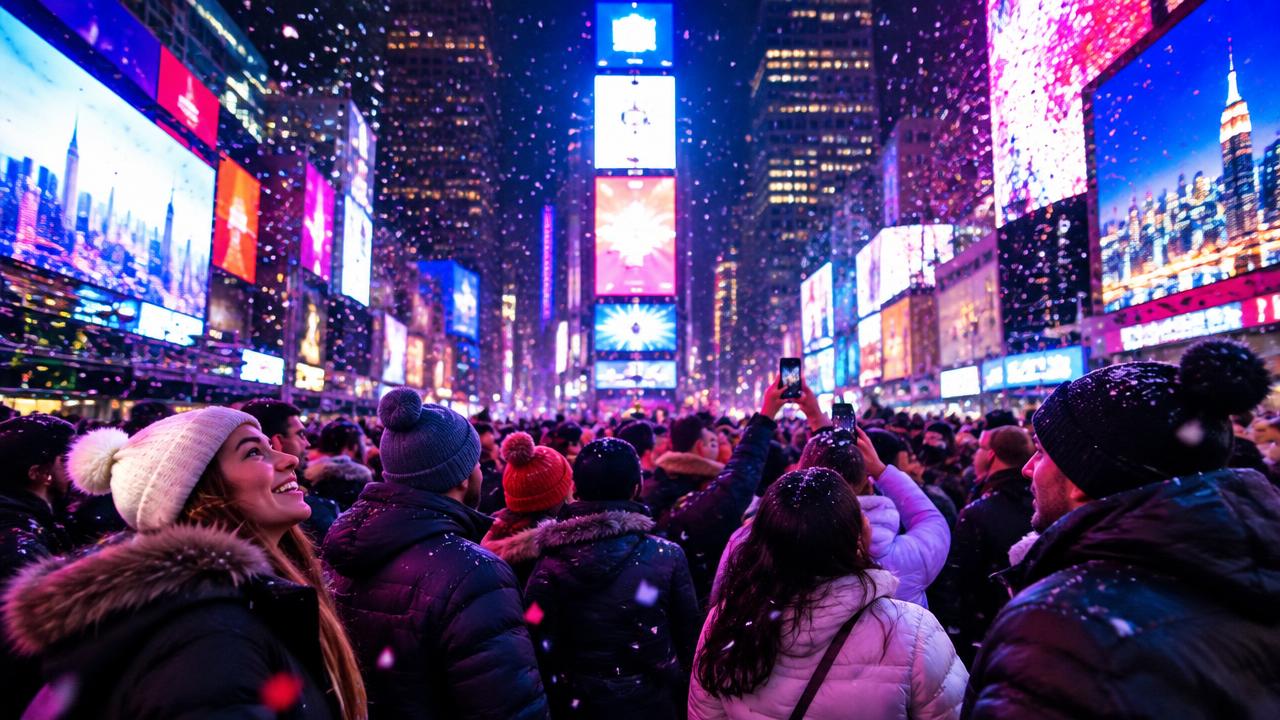
On Thursday 31 December 2026 the Times Square Ball makes its 60-second descent at 11:59 p.m. For the people in the street, the defining weather fact is time: viewing areas open at 3 p.m., there are no re-entries once you leave a pen, and midnight in New York is usually around freezing. This guide is about surviving that wait — not about the view, which is the same in any weather.
📊 Ball Drop 2026 at a Glance
- 📅 Date: Thursday 31 December 2026 · Ball raised ~6 p.m. · drop at 11:59 p.m. ET
- 📍 Viewing: Broadway (43rd–50th St) and Seventh Avenue up to 59th St
- 🌡️ Typical midnight: −3 to 3°C (high 20s to high 30s °F)
- ⏳ Exposure: often 6–9 hours standing outdoors
- 🥶 Main risk: wind-chill and cold rain, not the temperature alone
🧭 Decision Snapshot
Go ahead → Dry, calm, around 0°C — cold but manageable with proper winter layers, insulated boots and hand warmers
Proceed with caution → Breezy or light snow — the feels-like drops well below freezing; add a face covering and a spare pair of gloves
Reschedule → Cold rain or feels-like below −10°C — a nine-hour wait becomes a real cold-exposure risk; consider watching from indoors
A Typical New Year's Eve in Midtown
NOAA 1991–2020 normals for Central Park put late-December highs around 4°C (40°F) and lows near −1°C (30°F). New Year's Eve varies a lot from year to year: some are mild and damp, others are dry and bitterly cold behind an Arctic front.
- 🕒 3 p.m. (pens open): usually the warmest part of your wait, around 2–5°C
- 🌆 Sunset ~4:40 p.m.: temperatures start falling right after
- 🕛 Midnight: usually around freezing
- 🌨️ Precipitation: roughly a 1-in-3 chance on any late-December day, as rain, mix or snow
Why It Feels Colder Than the Forecast
Standing still
A person walking produces several times more heat than someone standing. After a few hours in a pen your body is barely warming itself, so a 0°C evening feels far harsher at 11 p.m. than it did at 4 p.m.
Wind between the towers
Midtown's avenues can channel wind. A 25 km/h (15 mph) breeze at 0°C produces a feels-like temperature around −6°C on exposed skin. The crowd shelters you somewhat, but the edges of each pen are exposed.
Wet is worse than cold
Rain at 1–2°C is the worst combination for spectators: damp clothing loses most of its insulation. Dry snow at −2°C is often more comfortable than cold rain at +2°C.
🥶 How feels-like temperature works
Check now →Dressing for a Nine-Hour Wait
- Thermal base layer (merino or synthetic — not cotton)
- Insulating mid-layer and a windproof, water-resistant outer coat
- Insulated boots and wool socks — cold pavement drains heat through your feet
- Hat, scarf or face covering, gloves plus a spare pair
- Chemical hand and toe warmers; check the official list of what you can bring
What You Can Know — and When
- Until late December: only the typical conditions above
- About a week out (24 December): mild vs Arctic pattern starts to show
- Day before: hourly temperature, wind and precipitation from 3 p.m. to midnight
🎉 Open the live New York forecast
Check now →Times Square New Year's Eve Weather FAQ
When is the Times Square Ball Drop?
The Ball descends at 11:59 p.m. Eastern on Thursday 31 December 2026, finishing at midnight. According to the Times Square Alliance, the Ball is raised at about 6 p.m. and the viewing areas officially open at 3 p.m.
How cold is Times Square at midnight on New Year's Eve?
Around freezing is typical. Long-term NOAA averages for Central Park put the late-December low near −1°C (30°F) and the high around 4°C (40°F). By midnight most years sit between −3 and 3°C (high 20s to high 30s °F), and some years are much colder.
Can you leave and come back to your spot?
Generally no — once you leave a viewing pen you lose the spot. That is why cold matters so much: many people stand in the same place for six to nine hours.
What if it rains or snows?
The celebration goes ahead. Rain near freezing is the worst case for spectators because wet clothing loses insulation; light snow is usually easier to handle than cold rain. Check the official FAQ for what you can bring (umbrellas and large bags are typically restricted).
When will the 31 December forecast be reliable?
Daily forecasts become useful about a week out (from roughly 24 December); hourly temperature and precipitation for the evening are worth checking the day before. Until then this page describes typical conditions only.
Sources
- Times Square Alliance — NYE FAQ — viewing areas, 3 p.m. opening, 6 p.m. Ball raising, 11:59 p.m. descent
- Times Square Alliance — NYE live webcast (December 2026) — 31 December schedule, 6 p.m.–12:15 a.m.
- NOAA NCEI U.S. Climate Normals (1991–2020) — Central Park December averages
Ring In 2027 Warm
Snap's live New York forecast shows hourly temperature, feels-like and precipitation for New Year's Eve from about a week out.