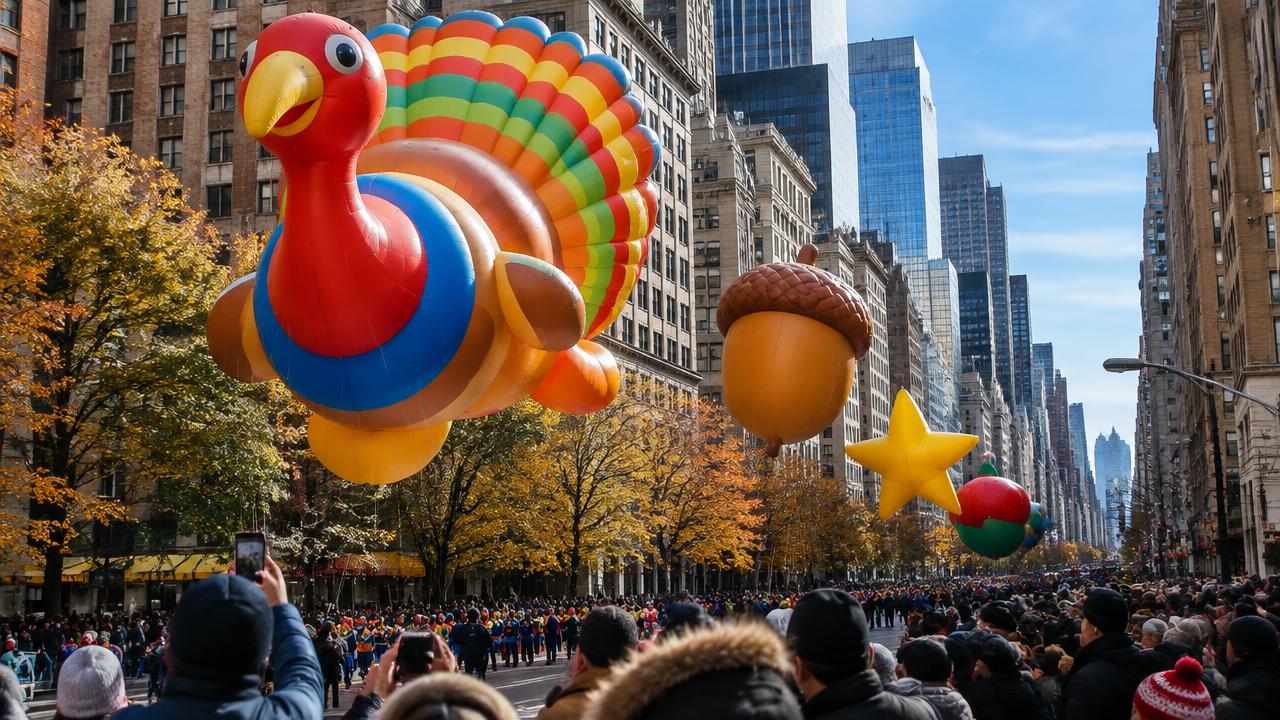
The 100th Macy's Thanksgiving Day Parade steps off on Thursday 26 November 2026 on Manhattan's Upper West Side. For the people lining Central Park West and Sixth Avenue the weather question is simple: how cold will a three-hour morning on the pavement feel — and will the wind let the giant balloons fly at full height? This guide separates what is typical for the date from what can only be known in the final week.
📊 The 100th Parade at a Glance
- 📅 Date: Thursday 26 November 2026, about 8:30 a.m.–noon ET
- 📍 Route: Central Park West at 77th St → Sixth Avenue → Macy's Herald Square
- 🌡️ Typical at step-off: 3–7°C (38–45°F); afternoon high near 10°C (50°F)
- 💨 The deciding variable: wind and gusts — they affect the balloons, not the parade date
- 🔮 Forecast status: climate only until about 19 November
🧭 Decision Snapshot
Go ahead → Calm, dry and above 5°C — dress in layers and arrive early for a front spot on Central Park West
Proceed with caution → Breezy or showery — the wind-chill makes standing still feel 3–5°C colder; bring a waterproof outer layer and hand warmers
Reschedule → Strong gusts forecast — expect balloons to fly lower or be grounded; decide whether the trip is still worth it for you
Typical Thanksgiving Morning Weather in Manhattan
These are long-term averages for late November at Central Park (NOAA 1991–2020 normals), not a forecast for 2026. Late November is a transition month: the first properly cold air masses arrive, but snow on Thanksgiving itself is rare.
- 🌅 Sunrise: around 6:55 a.m. — the parade starts in low, slanting light
- 🌡️ Average low / high: about 3–4°C / 10°C (high 30s / about 50°F)
- 🌧️ Precipitation: November averages around 9 wet days in New York — roughly a 1-in-3 chance on any given day
- ❄️ Snow: possible but uncommon this early in the season
- 🏙️ Street effect: the avenues between tall buildings can funnel wind, so it may be gustier on the route than in a park
Will the Balloons Fly? How Wind Affects the Parade
Most outdoor events worry about rain. The Macy's parade worries about wind, because its signature giant balloons are huge, light structures handled by teams on the street. After a balloon struck a lamppost and injured spectators in 1997, New York City adopted binding wind rules that still govern the parade today.
The official wind limits
Under the rules New York City introduced in 1998, the giant balloons must not fly when sustained winds exceed 23 mph (37 km/h) or when gusts exceed 34 mph (55 km/h). These are two separate limits, and the distinction matters:
- Sustained wind is the average speed over a set period — the background push on a balloon the size of a building.
- Gusts are short bursts that can run 30–50% higher than the sustained figure. A day forecasting "20 mph gusting to 36 mph" is under the sustained limit but over the gust limit — and it is the gust limit that has come closest to grounding balloons in recent years.
Who decides, and when
The decision is not Macy's alone and not made days in advance. The NYPD monitors wind gauges along the 2.5-mile route, and the call is made by city officials together with the parade organisers — publicly described as a "game-day decision" taken on the morning itself. Each balloon also has its own risk profile: in marginal conditions balloons can be cleared to fly but held at a lower altitude (they can fly anywhere from about 10 to 50 feet up), which is why in windy years you may see the characters skimming the street rather than soaring.
Why the forecast is only half the story
Manhattan's avenues funnel wind between the towers — the Venturi effect — so gusts on the route can run stronger than a park or airport reading suggests. That local amplification is one reason officials watch live gauges rather than the regional forecast. It also means a forecast a few days out can shift: hourly wind and gust forecasts only become meaningful 2–3 days before, and the reading that matters is the one at 8 a.m. on the route.
What this means for you: a windy forecast does not cancel the parade — it has never been cancelled for weather — but it can change what you see, from full-height balloons to low-flying ones or, in a genuinely windy year, grounded balloons. Snap's forecast shows sustained wind and gusts hour by hour; the actual balloon decision belongs to the city and Macy's on the morning, and we don't predict it.
💨 What does a 20 or 30 mph gust actually feel like?
Check now →The Feels-Like Problem: Three Hours Standing Still
Good viewing spots on Central Park West fill well before dawn, so many spectators stand outside from 6 a.m. to noon. You are not walking and producing heat, so the gap between the thermometer and how it feels widens. A 5°C morning with a 25 km/h (15 mph) breeze feels close to freezing on exposed skin, and damp clothing removes heat even faster.
Dress for the step-off, not the afternoon high
- Thermal base layer + insulating mid-layer + windproof outer shell
- Hat, gloves and a scarf — your hands are holding a phone for hours
- Insulated shoes or two pairs of socks: cold rises from the pavement
- A foam pad or folding stool for children (check current rules on chairs along the route)
🌡️ How feels-like temperature is calculated
Check now →What You Can Know — and When
- Now to mid-November: only the climate picture above. Any site showing a "forecast" for 26 November today is showing an average.
- About 7 days out (19 November): first useful signal — a mild or cold pattern, dry or unsettled.
- 2–3 days out: hourly wind and gust forecasts become meaningful for the balloon question.
- Night before: decide layers and rain gear from the 6 a.m.–noon hourly forecast.
🗽 Open the live New York forecast
Check now →Macy's Parade Weather FAQ
When is the 100th Macy's Thanksgiving Day Parade?
Thursday 26 November 2026 (Thanksgiving Day). Macy's confirmed the 100th Parade with a 100-day countdown that began on 18 August 2026. The parade traditionally steps off around 8:30 a.m. Eastern and runs until about noon.
What is the weather usually like on Thanksgiving morning in New York?
Late-November mornings in Manhattan are typically cold rather than freezing: long-term averages put the day's high around 10°C (50°F) and the overnight low near 3–4°C (high 30s °F). At parade start the air is usually still close to the low, so most spectators stand in 3–7°C (38–45°F).
Can wind stop the parade balloons?
Yes — wind is the one weather factor with binding rules. Under New York City rules introduced after a 1997 balloon accident, the giant balloons must not fly when sustained winds exceed 23 mph (37 km/h) or gusts exceed 34 mph (55 km/h). In marginal years balloons have been flown lower instead. Snap does not decide or predict those calls — the city and the organisers make them on the morning, from live gauges along the route.
Does the parade go ahead in rain?
Yes. The parade runs in rain and has run in snow. Rain mainly changes the spectator experience: a 3–4 hour wait on a wet pavement at 5°C feels far colder than the thermometer says.
When will a real forecast for 26 November be available?
Daily forecasts become useful about 7 days out (from roughly 19 November), and the hourly wind forecast is what matters most from 2–3 days before. Until then this page shows typical conditions only, not a forecast.
Sources
- Macy's, Inc. newsroom — 100-day countdown to the 100th Parade — 100th Parade, Thanksgiving 2026
- Macy's Parade official site & FAQ — route and timing
- NOAA NCEI U.S. Climate Normals (1991–2020) — Central Park temperature and precipitation averages
- NYC Mayor's Press Office — 1998 parade safety measures — balloon wind limits: 23 mph sustained, 34 mph gusts
Watch the 100th Parade Prepared
From 19 November, Snap's live New York forecast shows the hourly temperature, feels-like and gusts for parade morning.