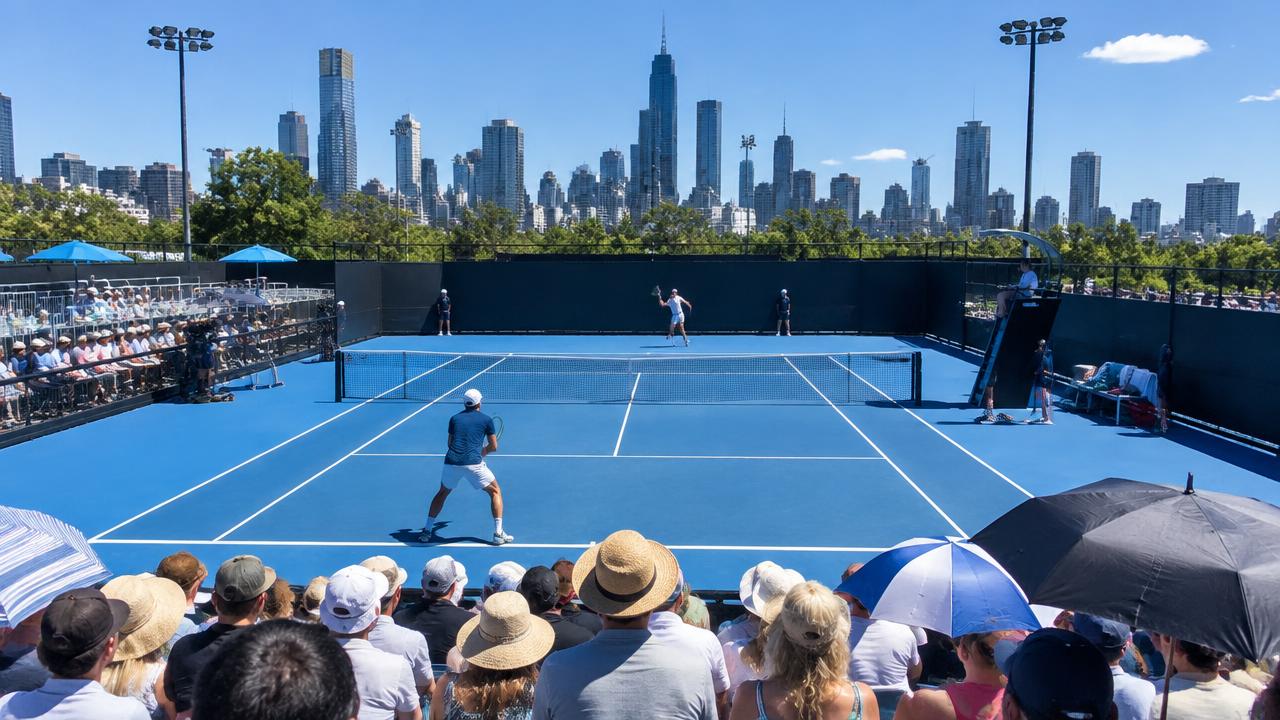
The Australian Open 2027 runs for three weeks at Melbourne Park — Opening Week from Monday 11 January, then the main draw from 17 to 31 January. That is the heart of Melbourne's summer, and three weeks in this city almost always means a mix: mild sunny days, a hot spell above 35°C, a dramatic cool change and the odd shower. For spectators the questions are practical — how hot will my session be, how strong is the sun on an outside court, and is a night session the smarter ticket?
📊 AO 2027 at a Glance
- 📅 Dates: 11–31 January 2027 · Opening Week 11–16 · main draw 17–31
- 📍 Venue: Melbourne Park, beside the Yarra and the CBD
- 🌡️ Typical January high: mid-20s °C, with hot spells of 35–40°C+
- ☀️ UV: extreme (11+) around midday on clear days
- 🌙 Hot-day tip: night sessions avoid the UV and the peak heat
🧭 Decision Snapshot
Go ahead → Mild 22–28°C — day sessions on outside courts are at their best; sun protection still essential
Proceed with caution → Hot northerly 32–37°C — prioritise shaded seats, roofed show courts or a night session; water every hour
Reschedule → Extreme heat 38°C+ — reconsider a full day on uncovered outside courts; a night session or later arrival is the safer choice
Melbourne in January: Averages and Swings
Bureau of Meteorology statistics for central Melbourne put the average January high in the mid-20s °C and the low around 15°C, with relatively little rain (around 40–50 mm for the month). The averages hide the defining feature: wind direction. Northerlies bring hot, dry inland air; southerly changes off the ocean can drop the temperature by 10–15°C in an hour.
- 🌤️ Most days: 20–28°C, sunny, comfortable
- 🔥 Hot spells: 1–4 days at 35°C+ are common across a three-week tournament
- 🌬️ Cool change: gusty, temperature crash, sometimes a short storm
- 🌙 Evenings: after a change, night sessions can need a jumper
Day Session vs Night Session
Day sessions
Day sessions cover the hottest hours and the peak UV window (roughly late morning to mid-afternoon). On outside courts there is little or no shade, and hard courts reflect heat back up at the stands. On a mild day this is the best way to see a lot of tennis; on a 38°C day it is a test of endurance.
Night sessions
Sunset in Melbourne in January is around 8:40 p.m., so night sessions start in daylight but with a lower sun. UV falls to low levels by early evening and temperatures ease — unless it is one of the rare nights when hot northerlies keep it above 30°C past dark. After a cool change, the opposite: bring a layer.
☀️ See when Melbourne's UV drops below 3
Check now →Heat: What Spectators Can Do
The tournament has its own heat policy for players; Snap does not predict when it applies. For spectators, the useful numbers are the forecast maximum and the feels-like temperature at the time you will be sitting outside.
- Above about 32°C, look for seats in the shade side of a stadium or roofed courts
- Carry a refillable bottle and use the water points; drink before you feel thirsty
- Light, loose, long-sleeved clothing beats bare skin and more sunscreen
- Plan indoor or shaded breaks during 1–4 p.m. on hot days
🔥 When is it too hot to be outside?
Check now →Rain and Roofs
Rod Laver Arena, Margaret Court Arena and John Cain Arena have retractable roofs; outside courts do not. On a showery day a show-court ticket is the weather-proof option, while a ground pass may mean waiting out interruptions. January rain in Melbourne usually comes in short bursts, often with a cool change.
What You Can Know — and When
- Until early January: the climate picture above only — no forecast exists yet
- About 7 days ahead of your session: hot or mild pattern
- 2–3 days ahead: the day's maximum and cool-change timing
- Session morning: hourly temperature, UV and radar
🎾 Open the live Melbourne forecast
Check now →Australian Open Weather FAQ
When is the Australian Open 2027?
Monday 11 January to Sunday 31 January 2027 at Melbourne Park. Opening Week runs 11–16 January; the main draw is 17–31 January, finishing with the men's singles final on Sunday 31 January.
How hot does it get at the Australian Open?
January is Melbourne's warmest month, with an average high in the mid-20s °C per the Bureau of Meteorology. But three weeks almost always include at least a few hot days above 35°C driven by northerly winds, and occasionally above 40°C — often followed by a sudden cool change.
Day session or night session — which is better for weather?
On hot days the night session is far more comfortable for spectators: the sun is lower or down, UV drops to low levels after about 6–7 p.m., and temperatures ease. On cool days the day session is more pleasant, and evenings after a cool change can be genuinely chilly.
Does rain stop play?
The three main show courts have retractable roofs, so play there can continue. Outside courts are open and stop for rain. Snap does not predict scheduling or heat-policy decisions — those belong to the tournament.
When will a forecast for my session be reliable?
About a week out for the general pattern (hot spell or cool spell), 2–3 days out for the day's maximum, and the morning of the session for timing of a cool change or showers.
Sources
- Australian Open — 2027 dates announced — 11–31 January 2027, Opening Week and main draw dates
- Bureau of Meteorology — climate statistics and UV — Melbourne January averages and UV levels
Choose Your Session Wisely
Snap's live Melbourne forecast and UV page help you pick between day and night sessions as the tournament approaches.