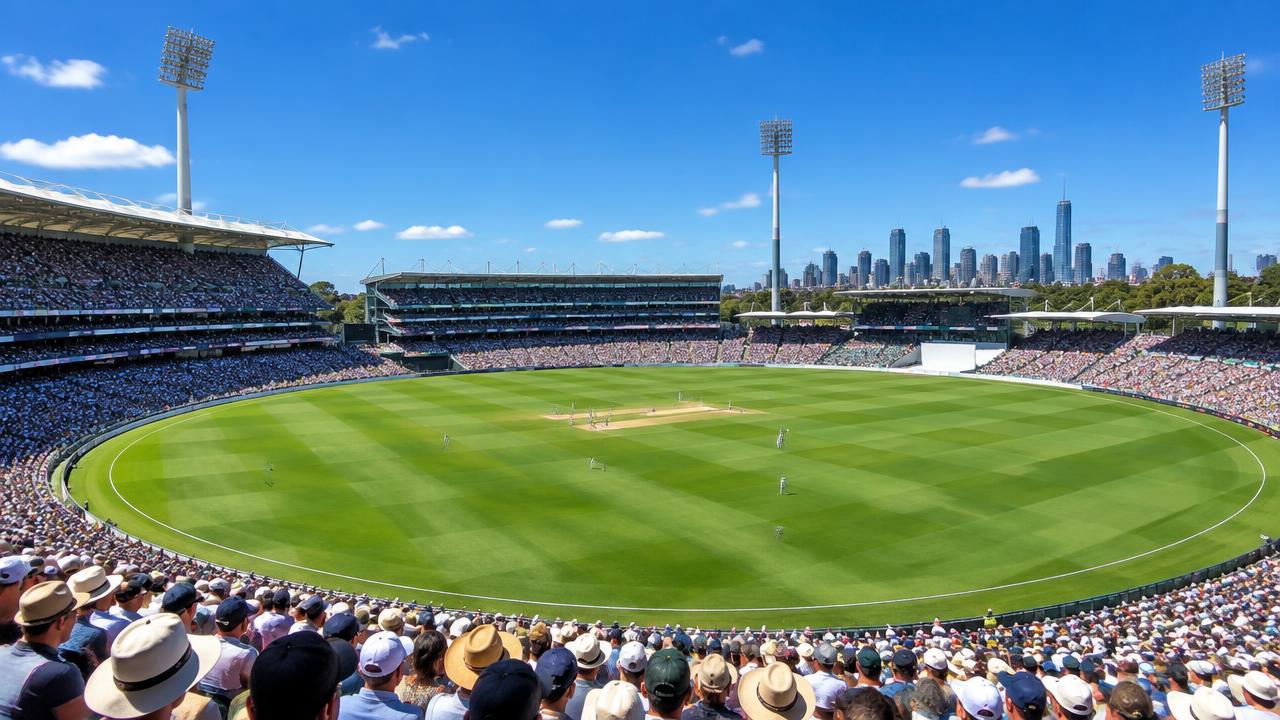
The Boxing Day Test is the biggest day in Australian cricket, and in 2026 Australia host New Zealand at the MCG from Saturday 26 December. A Test is five days, roughly seven hours each, in an open stadium during Melbourne's summer — a city famous for changing its mind. The weather that matters is not one day's forecast but the spread across all five: heat, the cool change that follows it, sun on uncovered seats, and the showers that send the covers on.
📊 Boxing Day Test 2026 at a Glance
- 📅 Dates: Sat 26 – Wed 30 December 2026 (if all five days are needed)
- 🕥 Start: 10:30 a.m. AEDT each day
- 🌡️ Typical high: mid-20s °C, but anywhere from below 20°C to above 35°C
- ☀️ UV: extreme (11+) around midday on clear days
- 🌧️ Rain: usually showers or a cool change, not all-day rain
🧭 Decision Snapshot
Go ahead → Mild, sunny 22–28°C day — classic Test weather; still wear SPF 50+ and a hat in any uncovered seat
Proceed with caution → Hot northerly day (32°C+) — pick a shaded upper-deck seat if you can, drink water every session, and expect the wind to turn later
Reschedule → Heat above 38°C or a day of persistent rain — consider the shaded seats or a different day of the match if your tickets allow
Melbourne's Late-December Pattern
Melbourne summer weather is driven by the wind direction. Northerly winds bring hot, dry air from inland Australia; a southerly "cool change" off the Southern Ocean can drop the temperature by 10°C or more within an hour. Over a five-day Test it is common to see both. Long-term Bureau of Meteorology statistics for central Melbourne put the average late-December high in the mid-20s °C and the overnight low in the low-to-mid teens.
- 🔥 Hot northerly day: 32–40°C, dry, gusty — the hardest day for spectators
- 🌬️ Cool change: wind swings southerly, temperature falls fast, sometimes with a shower
- 🌤️ Settled day: 20–26°C and sunny — the most common type
- 🌅 Daylight: sunset around 8:45 p.m.; light is rarely the problem, rain is
Sun and UV: The Underestimated Risk
Five days near the summer solstice means the sun is almost as high as it gets in Melbourne. The Bureau of Meteorology's sun-protection guidance applies whenever UV is 3 or above — at the MCG in late December that is roughly from mid-morning to late afternoon, i.e. almost the whole day's play. Cloudy, cool-change days still carry high UV, which is when people get caught out.
- Check whether your seat is under the roof line of the stand — many lower-level seats are fully exposed
- Reapply sunscreen at each session break (lunch and tea)
- Hat with a brim and sunglasses; a long-sleeved light shirt beats more sunscreen
☀️ See Melbourne's hourly UV curve
Check now →Rain and Interruptions
Showers stop play and the covers come on; play resumes when the umpires judge the ground fit. Snap does not predict playing decisions — but the hourly rain forecast tells you whether a day looks like a quick shower or a wet afternoon. The more useful check is radar on the day: Melbourne showers often pass through in under an hour.
Multi-day tickets
If you hold tickets for more than one day, compare the daily forecasts from about a week out rather than assuming day 1 sets the pattern. A hot Boxing Day followed by a cool, showery day 2 is a classic Melbourne sequence.
What You Can Know — and When
- Until mid-December: only the climate picture on this page
- From about 19 December: daily forecasts for 26–30 December start to become useful
- 2–3 days out: timing of heat and cool changes becomes clearer
- Match morning: hourly forecast and radar for shower timing
🏏 Open the live Melbourne forecast
Check now →Boxing Day Test Weather FAQ
When is the 2026 Boxing Day Test?
Australia play New Zealand at the Melbourne Cricket Ground from Saturday 26 December to Wednesday 30 December 2026, if the match goes the full five days. The MCG lists a 10:30 a.m. start each day.
How hot is Melbourne over Boxing Day week?
Late December in Melbourne averages a high in the mid-20s °C (mid-to-high 70s °F), but the spread is wide: a cool southerly day can stay below 20°C while a hot northerly wind can push past 35°C. Over five days you can easily get both.
Does rain stop play at the MCG?
The MCG is an open stadium, so rain and bad light can stop play, and covers go on. Melbourne summer rain often comes as short showers or a cool change rather than all-day rain, but a washed-out session is possible on any day.
How strong is the UV at the MCG in late December?
Very strong. Around the summer solstice, Melbourne's midday UV index regularly reaches the extreme category (11+) on clear days, per the Bureau of Meteorology. Fair skin can burn in well under 15 minutes in an uncovered seat.
Which day of the Test has the best weather?
Nobody can say in October. Daily forecasts become useful from about 19 December, and the five-day spread of the match means day 1 and day 5 can be very different. Check each day separately.
Sources
- MCG — International cricket schedule confirmed for 2026/27 — Boxing Day Test v New Zealand from 26 December 2026
- MCG — Boxing Day Test day pages — daily 10:30 a.m. start, dates of days 1–5
- Bureau of Meteorology — climate statistics and UV/sun protection — Melbourne summer averages, UV guidance
Plan Every Day of the Test
Snap's live Melbourne forecast and UV page show each day of 26–30 December as soon as they come into range.