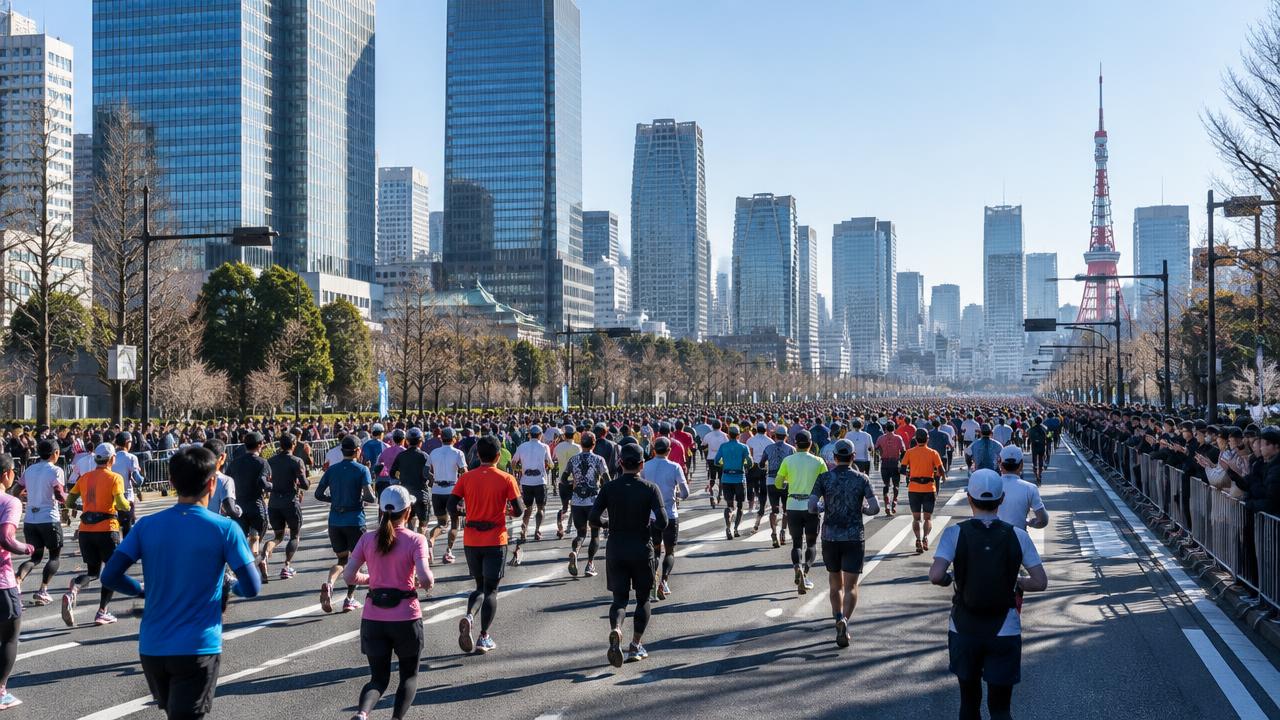
The 20th Tokyo Marathon starts at 9:10 a.m. on Sunday 7 March 2027 outside the Tokyo Metropolitan Government Building in Shinjuku, with 40,000 runners heading through Asakusa, Ginza and past Tokyo Station. Early March is cool in Tokyo — often excellent marathon weather. This guide covers what race morning normally looks like, how conditions change between the elite finish and the 7-hour cut-off, and what to watch in the forecast.
📊 Tokyo Marathon 2027 at a Glance
- 📅 Date: Sunday 7 March 2027 · start 9:10 a.m. JST · cut-off 4:10 p.m.
- 📍 Course: Tokyo Metropolitan Government Building → Gyoko-dori (Tokyo Station)
- 🌡️ Typical start: 6–10°C; afternoon high around 12–13°C
- 🏃 For running: usually within the cool range most runners prefer
- 🌧️ Risk days: cold rain with wind; occasionally an unusually warm day
🧭 Decision Snapshot
Go ahead → Dry, calm, 5–12°C — near-ideal marathon conditions; start in a disposable layer and race in light kit
Proceed with caution → Cold rain or a stiff north wind — gloves, arm sleeves and a rain poncho for the start corral; expect a slower second half
Reschedule → Unusually warm (18°C+) and sunny — slow your target pace, use every aid station and take shade for the later hours
Early March in Tokyo
Japan Meteorological Agency 1991–2020 normals for Tokyo put early-March daily highs around 12–13°C and lows around 4°C. Weather systems pass every few days at this time of year, so a race day can be bright and crisp, grey and damp, or occasionally mild ahead of a front.
- 🌅 Corrals (from ~8 a.m.): often 4–8°C — the coldest time for runners waiting in light kit
- 🏁 Elite finish (~11:15 a.m.): usually around 9–11°C
- 🕒 Mid-pack and later (1–4 p.m.): the warmest part of the day, around 11–14°C
- 🌧️ Rain: rain falls on roughly one day in three in early March
How the Weather Affects Your Race
Temperature
Endurance performance is generally best in cool air. A typical Tokyo Marathon morning is close to that sweet spot for the front of the field; slower runners finishing in the afternoon will see a few degrees more and more sun.
Wind
On a cold morning, wind matters more than the temperature. A 20 km/h north wind at 7°C feels around 3°C on wet skin — enough to make the first kilometres miserable and to chill runners who slow down late in the race.
Rain
Cold rain is the condition most likely to turn a good race into a hard one. Wet kit loses insulation, hands go numb, and shoes get heavy. A disposable poncho in the corral and gloves you can discard are cheap insurance.
🏃 Ideal running temperatures explained
Check now →For Spectators
Supporters standing at one spot for hours feel the cold more than runners do. Dress for 5–10°C with wind: a warm jacket, hat and gloves, and a hot drink. Cheering points move as the field spreads out, so plan your route between viewing spots using the train network.
What You Can Know — and When
- Until late February: typical conditions only — no race-day forecast exists yet
- About a week out (28 February): cold, mild or wet pattern
- 2–3 days out: temperature range and rain chance for the race window
- Evening before: hourly temperature, wind and rain for kit decisions
🗼 Open the live Tokyo forecast
Check now →Tokyo Marathon Weather FAQ
When is the Tokyo Marathon 2027?
Sunday 7 March 2027. The marathon starts at 9:10 a.m. (wheelchair race 9:05 a.m.) at the Tokyo Metropolitan Government Building and finishes at Gyoko-dori in front of Tokyo Station, with a 7-hour time limit. It is the 20th edition, with 40,000 runners.
What is the weather usually like on Tokyo Marathon morning?
Cool. Japan Meteorological Agency normals for early March in Tokyo put the daily high around 12–13°C and the low around 4°C. At the 9:10 start it is usually 6–10°C, rising to the low teens by early afternoon.
Is early-March weather good for a marathon?
Often very good. Most runners perform best in cool conditions, roughly 5–12°C, and a typical Tokyo Marathon morning falls in that range. The risks are a cold, rainy, windy day — which chills runners and spectators — or an unusually warm spring day for slower finishers.
Does wind affect the course?
Yes. The course runs through open avenues and along the waterfront sections; a north wind on a cold day adds noticeable wind-chill for runners in light kit, and headwind stretches slow the pace. Snap's hourly forecast shows wind and gusts for the city.
When will a race-day forecast be reliable?
About a week out (from roughly 28 February) for the general pattern, 2–3 days out for temperature and rain, and the evening before for kit decisions such as gloves, arm sleeves or a disposable layer.
Sources
- Tokyo Marathon Foundation — Tokyo Marathon 2027 event information (22 June 2026) — 7 March 2027, 40,000 runners, 20th edition
- Tokyo Marathon 2027 — general information — course, 9:10 start, 7-hour limit
- Japan Meteorological Agency — climate normals — Tokyo March temperature normals
Race Ready for Any Weather
Snap's live Tokyo forecast shows the hourly temperature, wind and rain for race morning from about a week out.