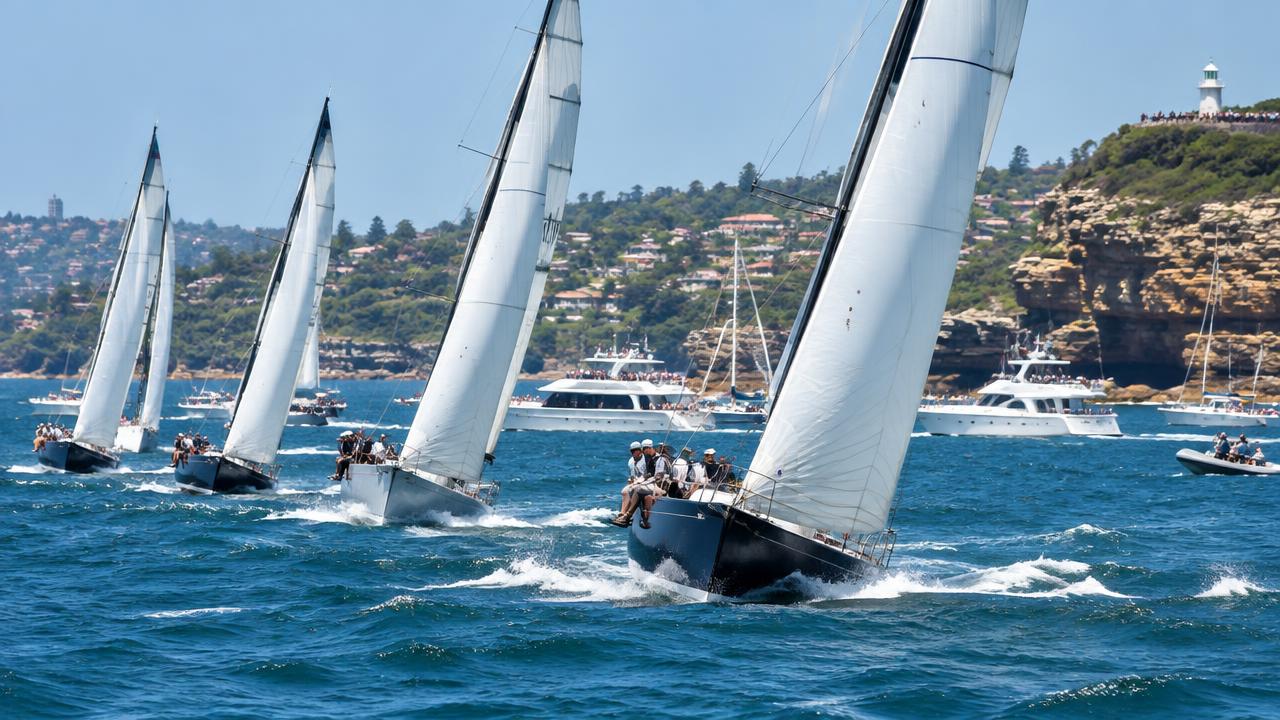
At 1:00 p.m. on Saturday 26 December 2026 the fleet for the 81st Rolex Sydney Hobart crosses the start line on Sydney Harbour, then heads out through the Heads for 628 nautical miles to Hobart. Weather is the essence of this race — but this page is deliberately about the start as seen from the shore and spectator boats. Snap is not a marine service; what we can help with is how Boxing Day afternoon will feel on a headland, and what the wind is doing to the spectacle.
📊 Sydney Hobart Start at a Glance
- 📅 Start: Saturday 26 December 2026, 1:00 p.m. AEDT
- 📍 Where: Sydney Harbour, exiting through the Heads
- 🌡️ Typical afternoon: about 25–26°C, humid
- 💨 Typical wind: afternoon north-east sea breeze; watch for a southerly change
- ☀️ UV: extreme around the 1 p.m. start on clear days
🧭 Decision Snapshot
Go ahead → Sunny with a steady sea breeze — spectacular spinnakers after the Heads; bring sun protection for the headlands
Proceed with caution → Southerly change forecast during the afternoon — expect a sudden wind shift and cooler, gustier air on exposed vantage points
Reschedule → Thunderstorm warnings — headlands and open water are the wrong place to be; watch the TV coverage instead
A Typical Boxing Day Afternoon on the Harbour
Bureau of Meteorology long-term averages for Sydney (Observatory Hill) put December highs around 25–26°C with overnight lows near 18°C. Summer afternoons often bring a north-easterly sea breeze that builds after midday — right on cue for a 1 p.m. start. Less predictably, a "southerly buster" can push up the coast with an abrupt wind swing and a temperature drop.
- 🌊 North-east sea breeze: the most common summer afternoon pattern
- 🌬️ Southerly change: fast wind shift, cooler air, sometimes showers or storms
- 💧 Humidity: late-December air often feels warmer than the thermometer
- ⛈️ Storms: summer afternoon storms are possible but not the norm
Wind From a Spectator's Point of View
For people watching, wind decides two things: how dramatic the start looks and how comfortable an exposed headland is. A fresh breeze gives heeling yachts and big spinnakers once the fleet turns south; a calm day means a slower, quieter exit. On the cliffs at the Heads, gusts are stronger than in a sheltered harbourside park — hats and umbrellas go first.
Snap's live forecast shows wind and gusts for Sydney in km/h, mph and knots. It is a land-based city forecast: it tells you about your afternoon on shore, not about conditions offshore or in Bass Strait.
⛵ Wind speed explained in knots, km/h and mph
Check now →Heat and Sun on the Headlands
Two to four hours with almost no shade
Spectators often claim spots on the headlands well before the start and stay until the fleet disappears south. Around the solstice the 1 p.m. sun is nearly overhead and the UV index on clear days is in the extreme range. Sea breezes make it feel cooler than it is, which is exactly when people burn.
- SPF 50+, hat, sunglasses and plenty of water
- A light windproof layer in case a southerly arrives
- Secure footwear for cliff-top paths
☀️ Check Sydney's hourly UV
Check now →What You Can Know — and When
- Until mid-December: only the climate context above
- From about 19 December: first useful daily outlook for Boxing Day
- 1–2 days out: timing of any southerly change becomes clearer
- Race morning: hourly wind and storm warnings for your vantage point
Sydney Hobart Start Weather FAQ
When does the 2026 Sydney Hobart Yacht Race start?
Saturday 26 December 2026 at 1:00 p.m. AEDT on Sydney Harbour, according to the Cruising Yacht Club of Australia. It is the 81st edition of the 628-nautical-mile race to Hobart.
Where is the best place to watch the start?
Popular shore vantage points are the headlands near the harbour entrance — around South Head/Watsons Bay and North Head — plus harbourside parks. Headlands are exposed: there is little shade, and wind is stronger there than in the inner harbour.
What is the weather usually like on Boxing Day afternoon in Sydney?
Typically warm: late-December averages for Sydney put the afternoon around 25–26°C with a humid feel. A north-easterly sea breeze is common on summer afternoons; a southerly change can arrive with a sudden wind shift and cooler air.
Is this page a sailing or marine forecast?
No. Snap provides land-based weather for spectators — temperature, rain, UV, wind and gusts at the city. Sailors must use the official Bureau of Meteorology marine forecasts and race briefings. We give no navigation or race-safety advice.
Does weather affect the race further south?
Yes, famously — conditions in Bass Strait and off Tasmania can be very different from a sunny Sydney start. That is outside what this page covers; the race organisers and Bureau of Meteorology marine services are the authorities.
Sources
- Cruising Yacht Club of Australia — 2026 Rolex Sydney Hobart event page — start 26 December 2026, 1:00 p.m., 81st edition, 628 nm
- Rolex Sydney Hobart — official site — race overview and history
- Bureau of Meteorology — climate statistics and marine forecasts — Sydney December averages; official marine forecasts for sailors
Watch the Start in Comfort
Check Snap's live Sydney forecast for Boxing Day afternoon heat, UV and wind from about a week out.