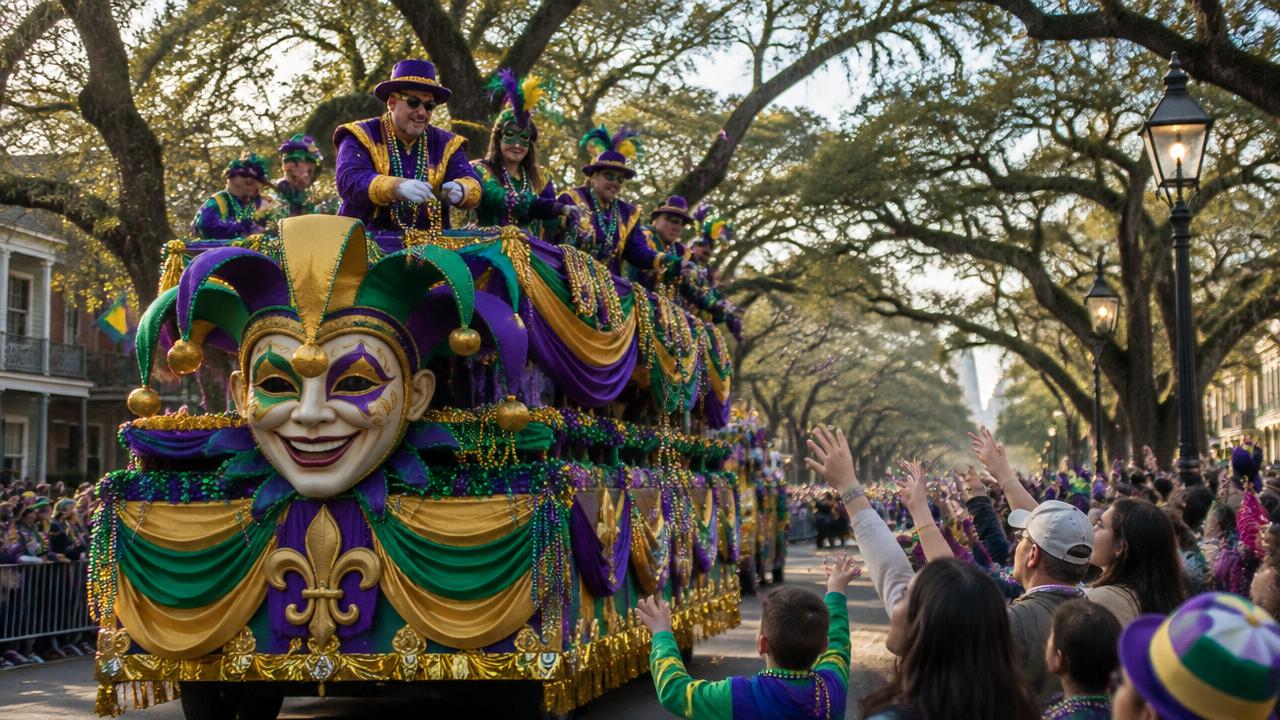
Mardi Gras Day falls on Tuesday 9 February 2027, early in the calendar because Easter 2027 is on 28 March. Early February in New Orleans sits right in the season of alternating air masses: warm, humid Gulf air one day, a cold front with rain and wind the next. For parade-goers that means planning around a whole week of nights on St. Charles Avenue, not a single forecast.
📊 Mardi Gras 2027 at a Glance
- 📅 Fat Tuesday: 9 February 2027 · season opens 6 January
- 🎭 Peak parades: the final week and a half before Fat Tuesday
- 🌡️ Typical: highs around 18–19°C (mid-60s °F), lows near 8–9°C (upper 40s °F)
- ⛈️ Watch for: cold fronts with thunderstorms and wind
- 🌇 Sunset: about 5:50 p.m. — night parades cool off fast
🧭 Decision Snapshot
Go ahead → Mild, dry 15–22°C — perfect parade weather; a light jacket for night parades
Proceed with caution → Cold front passing: rain, gusty wind, temperature dropping into single digits °C — waterproofs and warm layers, and check for schedule changes
Reschedule → Severe thunderstorm or high-wind warnings — parades may be moved or rolled earlier; follow city and krewe announcements
Early February in New Orleans
NOAA 1991–2020 normals for New Orleans put early-February highs in the mid-60s °F (about 18–19°C) and lows in the upper 40s °F (8–9°C). February is also one of the wetter months, with roughly 4–5 inches (100–125 mm) of rain on average, usually delivered by passing fronts rather than daily drizzle.
- ☀️ Warm sector days: 22–26°C, humid, south wind off the Gulf
- 🌧️ Front day: line of showers or storms, gusty wind shift
- 🥶 Behind the front: clear, breezy and raw — 5–12°C, colder at night
When Weather Changes the Parade Schedule
Of all the weather factors, thunderstorms and strong winds are the ones that move parades. Tall floats, marching bands and dense crowds on long routes make lightning and gusts a safety issue, and in recent seasons parades have been rescheduled or rolled earlier ahead of storms. Snap does not predict those decisions — the city and the krewes make them — but the hourly forecast shows when a front is likely to arrive.
Day parades vs night parades
Daytime parades on Saturday, Sunday and Fat Tuesday morning get the warmest part of the day. Night parades start around or after sunset; on a clear evening behind a front, temperatures can fall 5–8°C between your arrival and the last float.
What to Wear on the Route
- Layers you can add as the evening cools — a fleece under a light rain jacket covers most nights
- Closed, comfortable shoes: you stand and walk for hours, and streets get wet and sticky
- A poncho rather than an umbrella in dense crowds
- Sun protection for daytime parades — February sun is mild but you are outside all day
What You Can Know — and When
- Until late January: typical conditions only
- From about 2 February: outlook for the big parade weekend and Fat Tuesday
- 1–2 days out: timing of fronts and storms — the information that matters for schedule changes
🎭 Open the live New Orleans forecast
Check now →Mardi Gras Weather FAQ
When is Mardi Gras 2027 in New Orleans?
Mardi Gras Day (Fat Tuesday) is Tuesday 9 February 2027. Carnival season starts on Twelfth Night, 6 January, and the busiest parade stretch is the final week and a half before Fat Tuesday.
What is the weather like at Mardi Gras in early February?
Mild but changeable. NOAA normals for New Orleans put early-February highs around 18–19°C (mid-60s °F) and lows near 8–9°C (upper 40s °F). Warm, humid days near 25°C and cold, raw days around 7°C can both happen in the same week.
Are parades cancelled or moved for weather?
Yes — severe weather can move parades. In recent years, krewes and the city have rescheduled or shifted parades ahead of thunderstorms and high winds. Those decisions come from the city and the krewes; always check official announcements on the day.
Which weather is the biggest problem for parade-goers?
Long waits on the route combined with either cold rain or strong winds. Night parades also cool off quickly after sunset (around 5:50 p.m.), so a comfortable afternoon can turn chilly by the time the floats arrive.
When can I trust a forecast for my parade nights?
About a week out for the general pattern (from roughly 2 February for Fat Tuesday), and 1–2 days out for thunderstorm timing, which is what drives schedule changes.
Sources
- New Orleans & Company (official tourism) — Mardi Gras 2027 parade schedule — Mardi Gras Day 9 February 2027; season from 6 January
- NOAA NCEI U.S. Climate Normals (1991–2020) — New Orleans February temperature and rainfall averages
Plan Your Parade Nights
Snap's live New Orleans forecast shows when fronts, rain and wind arrive across the final Carnival week.